Egyptian Vase 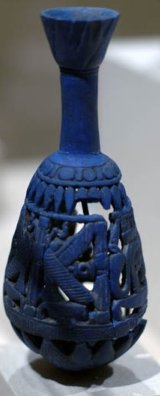 The ancient Greeks and Romans made wreaths as well, along with garlands and chaplets. Though they didn't use vases as exclusively as the Egyptians, they held much value in the flower as a symbol. They gave wreaths for awards of honor, to both poets and war heroes. Perhaps the most famous example of this practice is their use of wreathes as awards for the winners of the ancient Olympics. Japanese Ikebana Arrangement 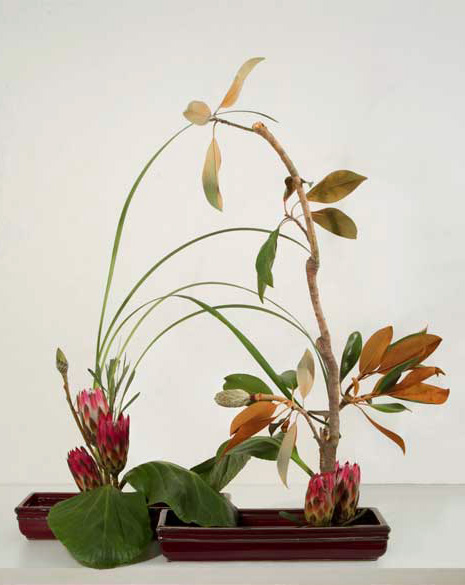 Flower arrangement arrived in Europe
during the Middle Ages. At the end of the dark ages, churches started using flowers more for decoration. Crusaders brought back
exotic plants from the Middle East, which made way for experimentation
with floral presentation. This art bloomed during the Italian
Renaissance, with people trying different materials for containing
flowers, like bronze and glass. Symbolism is and has been a key element of floral arrangement throughout its history. In ancient Egypt, the lotus flower was commonly used in arrangements, and was considered to be sacred. Religion played a key role in Chinese flower arrangements as well, placing much value on yellow flowers, which was the official color of China. The highest regarded of flowers in China is the peony, which was considered "the king of flowers" and represented good wealth and fortune. However, a group of flowers used all around the world throughout history are the many varieties of the lily. |
A Brief History of Flower Arrangement Flower arrangement is a practice with great roots in ancient history. The oldest records of floral arrangement are hieroglyphs in ancient Egypt, depicting flowers decoratively collected in vases. The ancient Egyptians made elaborate vases to hold flowers in specific ways. They used flowers for both every day occasions, such as table decorations, as well as in ceremonies, like burials. The Egyptians made wreaths to be worn by loved ones of the deceased. They left the flowers in the tombs, much like practices still done today at grave stones.
Julius Caesar with wreath 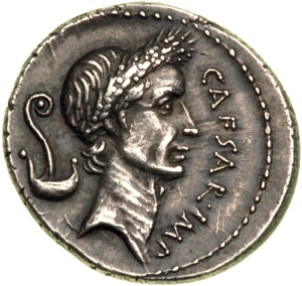
The dynasties of ancient China also made use of flowers, mostly for religious practices. They placed great dedication in the cutting of flowers for the religious ceremonies of Buddhism, Taoism, and Confucianism. The Buddhists, for whom it was forbidden to take the life of another living thing, followed strict procedures when using flowers for alters. The Buddhist art of flower arrangement crossed over from China into Japan with the spread of Buddhism. As the religion spread through the population in the thirteenth and fourteenth centuries, so did flower arrangement. It was around that time that the first methods of Japanese flower arrangement arose. Chinese Peony 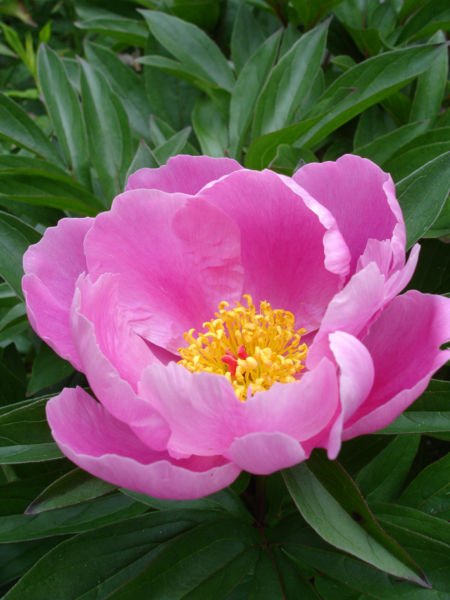 |
